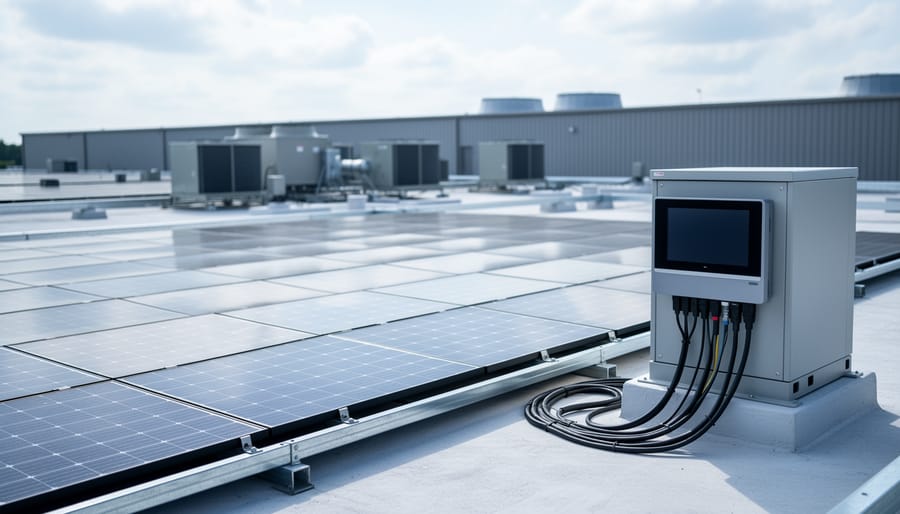
Off-the-shelf energy systems work for some businesses. For operations with specific power demands, complex operational schedules, or ambitious sustainability targets, standardized solutions leave money on the table and opportunities unrealized.
Bespoke solutions in the energy sector mean custom-designed systems engineered around your actual consumption patterns, physical constraints, and financial objectives. This goes beyond selecting a battery size from a catalog. It involves detailed load analysis, site-specific design considerations, and integration with existing infrastructure to create an energy system that responds to how your business actually operates.
The distinction matters because energy consumption varies dramatically across industries and facilities. A manufacturing plant with predictable production cycles has completely different requirements than a commercial building with variable occupancy, or a warehouse managing refrigeration loads alongside forklift charging. Generic systems either oversize components, wasting capital, or undersize them, limiting performance when you need it most.
In 2026, technology partnerships between system integrators, equipment manufacturers, and software providers enable unprecedented customization without corresponding cost penalties. Advanced monitoring systems adapt to real-time conditions. Modular battery configurations scale with growth. Intelligent controls optimize between grid power, solar generation, and stored energy based on your rate structure and operational priorities.
The business case for tailored energy systems centers on energy independence. Companies reduce exposure to utility rate volatility while maintaining critical operations during grid disruptions. But financial benefits extend further: demand charge reduction through strategic load shifting, maximized solar self-consumption, and alignment with specific operational requirements that standard packages simply can’t address.
Understanding what genuine customization delivers versus marketing rhetoric determines whether bespoke solutions represent a strategic investment or an expensive distraction.
What Makes an Energy Solution Truly Bespoke
A bespoke energy solution starts with understanding your business, not with a product catalog. While standard energy packages offer fixed configurations designed for theoretical average users, bespoke solutions begin with a detailed assessment of your actual energy consumption patterns, operational workflows, and strategic objectives. This fundamental difference shapes everything that follows.
The characteristics that define truly bespoke solutions reveal why customization matters in commercial energy management:
- Customized Assessment
- A comprehensive analysis of your energy usage across time periods, identifying consumption peaks, operational patterns, and inefficiencies specific to your business rather than applying generic industry assumptions.
- Scalable Design
- System architecture that accommodates your current needs while providing expansion pathways for business growth, seasonal variations, and evolving energy requirements without requiring complete replacement.
- Infrastructure Integration
- Seamless connection with your existing electrical systems, solar installations, and operational equipment, working within your current setup rather than demanding costly infrastructure overhauls.
- Operational Alignment
- Energy strategies synchronized with your actual business hours, production schedules, and demand cycles, ensuring the system supports how your business operates day-to-day.
- Goal-Specific Configuration
- Technology selections and capacity sizing driven by your sustainability targets, budget constraints, and energy independence objectives rather than one-size-fits-all specifications.
This personalized approach means a manufacturing facility with heavy daytime machinery loads receives a fundamentally different battery storage configuration than a restaurant with evening peak demand, even if both buildings are similar sizes. The bespoke difference extends beyond equipment selection to how components work together within your specific context.
Genuine customization also accounts for your relationship with the grid. Some businesses prioritize maximum self-sufficiency and backup power, while others optimize for energy arbitrage, storing power when rates are low and drawing from batteries during expensive peak periods. A bespoke solution reflects these priorities in system design rather than forcing you to adapt your strategy to preset package limitations.
The scalability element proves particularly valuable as your business evolves. Unlike fixed systems that become inadequate or oversized as circumstances change, bespoke designs incorporate modular components that expand or adjust without wasting your initial investment. This future-proofing transforms energy infrastructure from a static purchase into an adaptive business asset.
Why Off-the-Shelf Energy Solutions Fall Short for Businesses
Standardized energy packages promise simplicity, but that convenience comes at a steep cost for most businesses. Generic systems are designed around average consumption profiles that rarely match real-world operational patterns, leaving companies paying for capacity they don’t use or struggling with insufficient power during critical periods.
The capacity mismatch becomes obvious when a standard 50kWh battery system sits at 30% capacity during off-peak hours yet can’t cover demand spikes when production ramps up. Manufacturing facilities running second shifts, retail stores with seasonal variations, and office buildings with weekend operations all face different energy rhythms that off-the-shelf solutions simply ignore. You’re either oversized and overpaying, or undersized and still drawing expensive grid power when you need it most.
Cost structures compound the problem. Standardized packages bundle components at fixed price points without considering your specific demand charges, time-of-use rates, or peak consumption windows. A business paying premium rates between 4-7pm needs different storage capacity and discharge programming than one with steady 24/7 operations, but cookie-cutter systems treat both identically. The result: you’re optimizing for someone else’s energy costs, not yours.
Perhaps the most significant limitation lies in missed revenue opportunities. Standard systems rarely include the smart controls needed for energy trading, demand response participation, or grid services that can generate income from your stored power. When wholesale electricity prices spike or your local grid operator pays for capacity relief, generic systems keep operating on their preset schedule, unaware of the profit sitting in your battery.
Bespoke solutions address these fundamental mismatches by starting with your business first, not a predetermined package. They’re built around your consumption data, operational schedule, growth projections, and revenue goals, delivering performance that standardized approaches can’t touch.
The Building Blocks of a Bespoke Business Energy Solution
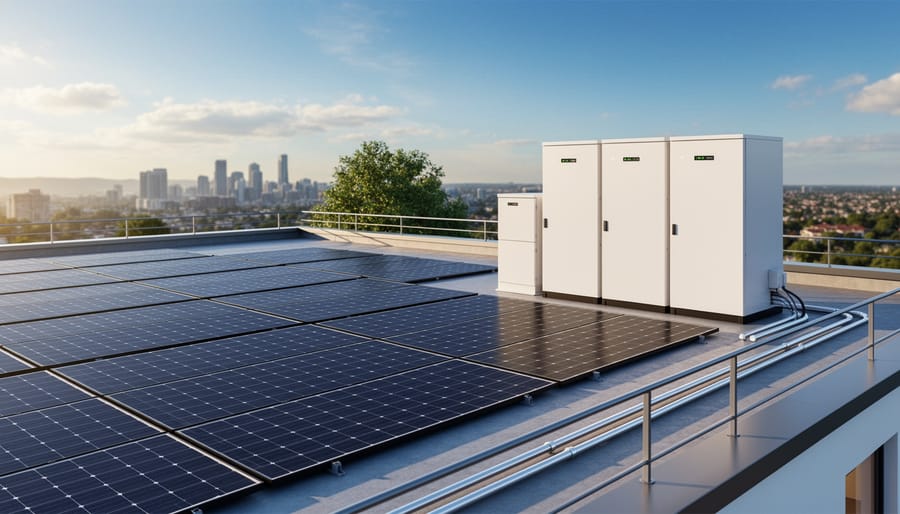
Custom Battery Storage Configuration
Battery storage is never about buying the biggest system you can afford. A bespoke configuration starts with analyzing your business’s actual energy consumption patterns, when you use power, how much you draw at peak times, and which hours cost you the most. Our team examines twelve months of utility data to map these patterns, then designs storage capacity that matches your demand profile, not a generic template.
For a manufacturing facility running heavy machinery from 8 a.m. to 6 p.m., the configuration might prioritize high discharge rates during production hours when grid electricity prices peak. Compare that to a retail operation with moderate daytime use and refrigeration running 24/7: here, we’d configure smaller but continuous discharge capacity to offset baseload consumption. The difference in battery sizing, chemistry selection, and charge-discharge cycles can be substantial.
Technology partnerships with Tesla and SolarEdge allow us to select battery types matched to your specific demands. Tesla Powerwall units work well for businesses needing reliable backup and daily cycling, while SolarEdge systems integrate tightly with existing solar inverters for seamless energy management. We don’t push one brand over another; the choice depends on your infrastructure, budget, and how you’ll actually use the storage.
Growth projections matter too. If you’re planning facility expansion or adding equipment that will increase energy draw, we design modular configurations that accept additional battery units without replacing the entire system. This approach prevents the costly mistake of undersizing your storage based only on current needs, then facing a complete rebuild eighteen months later when demand grows.
Smart Solar Integration and Energy Management
Bespoke solar integration moves beyond simply connecting panels to a battery. A customized system orchestrates how energy flows through your business based on your actual operations, not a generic schedule. When solar generation peaks at midday, intelligent management systems analyze real-time factors: current energy prices, your operational load, battery charge levels, and forecast consumption patterns for the rest of your day.
This coordination determines the optimal path for every kilowatt generated. During periods of high grid prices, the system automatically routes solar power to batteries for later use or directs it to power critical operations directly, avoiding expensive electricity purchases. When grid prices drop or your battery reaches capacity, excess generation can be sold back to the network, creating revenue streams that standard installations miss entirely.
The intelligence extends to predictive capabilities. By learning your business rhythms, manufacturing shifts, peak retail hours, HVAC demands, the system positions stored energy where it delivers maximum value. A warehouse running overnight operations might prioritize battery charging during solar hours, then discharge during expensive evening rates. An office building could shift air conditioning loads to coincide with solar generation, reserving battery power for morning startup and late afternoon peaks.
Technology partnerships with SolarEdge enable this granular control through cloud-based monitoring platforms that provide visibility into energy flows and financial performance. The system adapts continuously, refining its decisions as your business patterns evolve and grid conditions change, ensuring your bespoke solution delivers sustained optimization rather than static performance.
Scalability and Future-Proofing
A truly bespoke energy solution doesn’t just meet your needs today. It anticipates where your business is headed tomorrow.
Standard energy systems force you into fixed capacity constraints. When your operations expand, you’re stuck ripping out equipment and starting over. Bespoke solutions eliminate that limitation through modular architecture. You start with the battery storage and solar capacity your business requires now, then add incremental modules as demand grows. A manufacturer opening a second production line can expand storage in 5-10kWh increments rather than replacing an entire system.
This modular approach addresses seasonal variations without overbuilding. A retail operation with peak demand during holiday seasons can deploy additional battery capacity temporarily, then scale back during slower months. The system adapts to your reality instead of forcing you to pay for unused capacity year-round.
Technology partnerships with SolarEdge and Tesla ensure your system remains compatible with future innovations. When new battery chemistries emerge or inverter efficiency improves, modular systems integrate these advances without wholesale replacement. You’re investing in a platform, not a static installation.
Growth planning becomes straightforward. Your energy provider conducts periodic consumption reviews, identifying expansion opportunities before bottlenecks emerge. If you’re adding electric vehicle charging stations or upgrading HVAC systems, your bespoke solution scales alongside these investments.
The result is energy infrastructure that grows with your business, protects your investment, and delivers consistent performance across changing operational demands. That’s future-proofing with purpose, not just promise.
Real-World Applications: Bespoke Solutions Across Business Types
Manufacturing plants face a unique energy puzzle: massive consumption during production hours but minimal demand at night. A textile manufacturer in the East Midlands addressed this with a bespoke battery storage system sized to capture off-peak grid energy and discharge during their 6am-4pm production window. The solution incorporated 500kWh Tesla Powerpack units synchronized with their existing solar array, cutting demand charges by 42% while maintaining full production capacity. The customized system accounts for seasonal variations in fabric dyeing processes, automatically adjusting charge-discharge cycles as production schedules shift.
Retail operations present the opposite challenge: variable demand that spikes unpredictably. A regional grocery chain implemented bespoke solutions across twelve locations, each with different footprints and operational patterns. Rather than identical systems, each store received battery capacity matched to its specific refrigeration load, peak customer hours, and local grid pricing. Stores with larger cold storage received proportionally more capacity, while high-traffic urban locations prioritized peak-shaving during afternoon rushes. This granular customization delivered 38% greater savings than standardized installations would have achieved.
| Business Type | Primary Energy Challenge | Bespoke Solution Approach |
|---|---|---|
| Manufacturing Facility | High daytime consumption, predictable schedules | Large-capacity storage synchronized with production cycles, demand charge reduction focus |
| Retail Operations | Variable demand, refrigeration loads | Location-specific sizing, peak-shaving during customer hours, cold storage priority |
| Office Buildings | Weekday-only demand, grid dependency | Energy independence design with backup capability, solar-battery integration |
| Warehouse/Logistics | 24/7 operations, consistent baseload | Continuous cycling systems, time-of-use optimization, minimal downtime design |
Office buildings pursuing energy independence require systems designed around weekday occupancy patterns. A professional services firm in Bristol installed a bespoke solution combining rooftop solar with SolarEdge inverters and 250kWh battery storage, calibrated to their Monday-Friday 7am-7pm operations. The system provides complete energy autonomy during typical workdays, with the battery sized to bridge evening hours and cloudy periods. Critically, the design includes backup capacity for their server room, ensuring business continuity during outages without oversizing the entire system.
Warehouses operating round-the-clock need different thinking entirely. A distribution center outside Manchester implemented a bespoke approach that treats battery storage as a continuous cycling asset rather than backup power. The system charges during low-rate periods (11pm-5am) and discharges steadily across expensive daytime hours, matching the facility’s flat consumption profile. With forklift charging, conveyor systems, and climate control running constantly, the customized 800kWh configuration delivers time-of-use arbitrage that standard systems miss, generating £47,000 annual savings against a standardized approach that would have cost more upfront while delivering half the return.
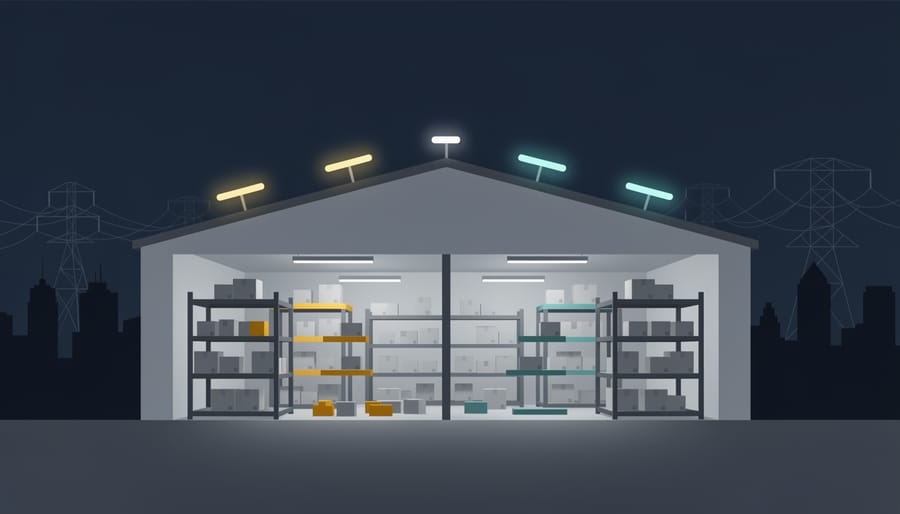
The Business Case: Cost-Effectiveness and ROI of Bespoke Energy Systems
The financial argument for bespoke energy systems centers on multiple revenue streams and cost reductions that standard installations simply can’t deliver. Businesses typically see returns through five distinct channels, each amplified by customization.
Energy bill reduction forms the foundation. A properly sized bespoke system matches your actual consumption patterns rather than theoretical averages. Manufacturing facilities using 70% of their electricity between 9am and 5pm see dramatically different savings compared to operations running overnight shifts. Customized battery capacity and discharge timing can cut energy costs by 40-60% for businesses with predictable high-usage periods, versus 20-30% from generic installations that weren’t designed around your specific schedule.
Demand charge avoidance delivers substantial savings for commercial customers. Many utilities charge based on your highest 15-minute power draw during the month. A bespoke battery system configured to shave these peaks can eliminate hundreds or thousands in monthly charges. One distribution center reduced their annual demand charges from £18,000 to £4,200 by deploying batteries sized specifically to their loading dock operations, where multiple forklifts charging simultaneously created costly spikes.
Revenue generation through energy trading represents a newer opportunity. Businesses with bespoke systems can participate in grid services programs, selling stored energy back during peak pricing periods. Companies in areas with time-of-use rates or dynamic pricing can earn £3,000-£12,000 annually by discharging batteries when grid electricity prices surge. This requires intelligent systems calibrated to your consumption needs first and trading opportunities second.
Incentives and rebates vary significantly by location and system type. Bespoke solutions maximize these benefits because designers can incorporate specific technologies or capacities that qualify for the highest rebates. Some businesses recover 25-40% of system costs through combined government grants, tax credits, and utility incentives that generic proposals miss entirely.
Long-term cost predictability transforms energy from a variable expense into a controllable one. Once installed, your bespoke system generates electricity at a fixed cost per kilowatt-hour for 20-25 years. As grid prices rise 3-5% annually, the gap between your locked-in energy cost and market rates widens, compounding savings over time.
Energy independence carries strategic value beyond pure financials. Reducing reliance on grid electricity shields your business from price volatility, supply disruptions, and policy changes. This operational stability has measurable worth in business continuity planning and risk management frameworks.
How the Bespoke Solution Process Works
Understanding how bespoke solutions come to life helps businesses see this isn’t guesswork or sales theater, it’s a systematic process built around your actual operations. The journey from initial contact to optimized energy independence follows a clear path, with each stage revealing insights about your business that generic packages would miss entirely.
- Comprehensive Energy AuditA qualified engineer visits your facility to document all energy-consuming equipment, lighting systems, HVAC units, production machinery, and existing renewable infrastructure. This physical assessment captures what spreadsheets can’t: thermal inefficiencies, equipment placement, and operational workflows that affect energy usage patterns throughout your space.
- Consumption Pattern AnalysisYour business receives monitoring equipment that tracks energy use in 15-minute intervals over at least two weeks, capturing daily cycles, weekly variations, and demand spikes. This granular data reveals whether your consumption peaks during expensive grid periods, how operational shifts affect demand, and where battery storage delivers maximum value by shifting load to cheaper time periods.
- Custom System DesignEngineers combine audit findings with consumption data to model battery capacity requirements, solar integration opportunities, and configuration options that match your facility’s unique profile. The design accounts for seasonal variations, planned expansion, backup power priorities, and whether you’ll benefit more from peak shaving, load shifting, or grid arbitrage strategies.
- Technology Selection and SpecificationBased on your operational requirements and budget parameters, the team specifies equipment from proven partners like Tesla Powerwall systems for scalable battery storage and SolarEdge inverters for intelligent energy management. Brand selection reflects reliability, warranty terms, compatibility with your existing infrastructure, and integration capabilities rather than pushing whatever’s cheapest or most profitable to install.
- Coordinated InstallationCertified installers schedule work around your operations to minimize disruption, handling electrical upgrades, mounting systems, battery placement, and control software configuration. You receive detailed system documentation and training on monitoring tools that show real-time energy flows, cost savings, and system performance.
- Performance Monitoring and OptimizationAfter commissioning, your system enters an optimization phase where energy management algorithms learn your consumption patterns and adjust charging schedules, discharge timing, and solar utilization. Quarterly reviews compare predicted versus actual savings, identify any operational changes that warrant configuration adjustments, and ensure you’re extracting full value from your investment.
This structured approach transforms what could be a confusing procurement process into a transparent partnership where you understand every decision. The key difference from standard installations is continuous refinement, bespoke solutions evolve with your business rather than remaining static after installation day.
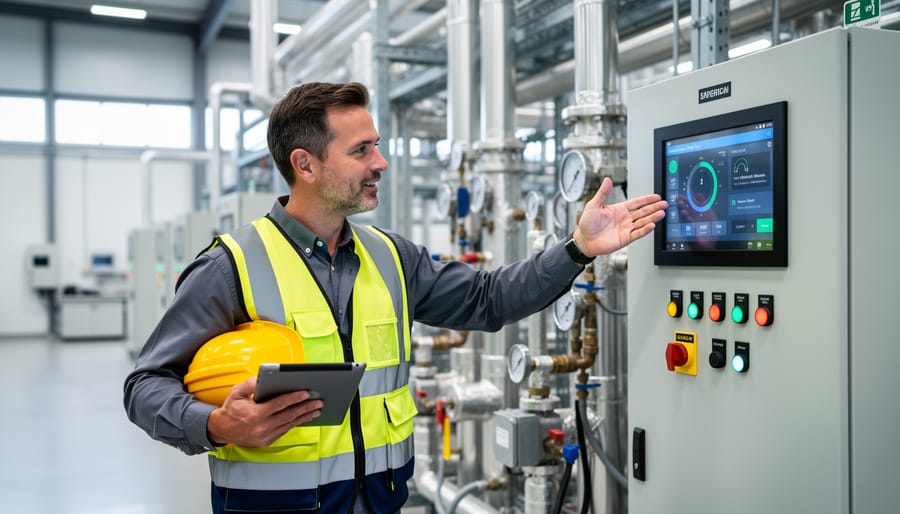
Bespoke Solutions for Residential Solar Enhancement
Homeowners with solar panels face the same fundamental challenge as businesses: generic battery solutions rarely align with how they actually use energy. A family that runs air conditioning through summer afternoons has different storage needs than a household where everyone’s out during the day. Bespoke battery storage transforms existing residential solar from intermittent generation into a complete energy system shaped around your life.
The customization starts with understanding your household’s energy rhythm. When do you cook dinner? How often do you run the dishwasher? What happens when storms knock out power? A tailored system sizes battery capacity to match your evening consumption peak, not some national average. If you typically use 15 kWh between sunset and bedtime, a bespoke solution provides enough storage to cover that demand plus a buffer, rather than leaving you short or paying for unnecessary capacity.
Backup power requirements vary dramatically between homes. A household with medical equipment needs comprehensive coverage. A weekend cottage might only require essential circuits protected. Custom configurations prioritize which loads stay powered during outages and for how long, installing the exact battery capacity and backup circuits your situation demands.
Technology choices matter for residential applications too. Partnerships with proven manufacturers like Tesla and SolarEdge ensure compatibility with existing inverters and management systems. A homeowner with a SolarEdge inverter gets a battery solution engineered to integrate seamlessly, maximizing the value of equipment already installed.
Individual sustainability goals shape the system design. Some homeowners want complete grid independence. Others focus on maximizing solar self-consumption while maintaining grid connection. A bespoke residential solution balances your environmental objectives with practical energy security, creating a system that works with your priorities rather than against them.
Energy optimization in 2026 is not about applying generic systems to unique businesses. It’s about designing solutions that match your actual operations, consumption patterns, and strategic goals. Bespoke solutions deliver measurable results because they address your specific challenges rather than force-fitting standardized packages that leave money on the table and opportunities untapped.
Through partnerships with proven technology leaders like Tesla and SolarEdge, customized energy systems provide the reliability businesses need while maximizing efficiency gains that off-the-shelf options simply cannot achieve. Whether you’re a manufacturer managing peak demand charges, an office building pursuing energy independence, or a homeowner enhancing an existing solar installation, the right configuration makes the difference between adequate performance and genuine optimization.
The financial and operational benefits are tangible: reduced energy costs, predictable expenses, revenue generation through intelligent energy management, and alignment with sustainability commitments that matter to customers and stakeholders. Most importantly, bespoke business energy solutions grow with you, adapting to changing needs rather than becoming constraints.
If your current energy approach feels like a compromise, that’s because it probably is. Explore what a truly customized system could deliver for your specific situation this year.