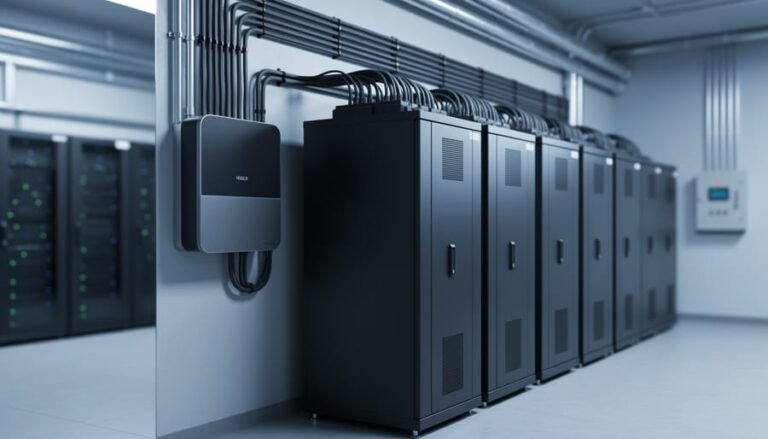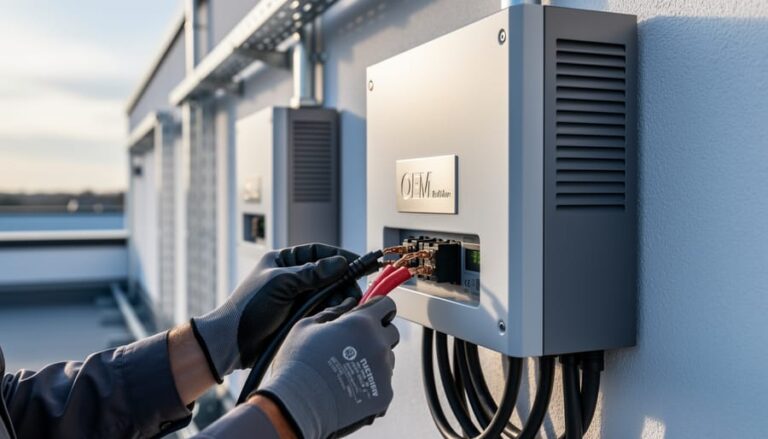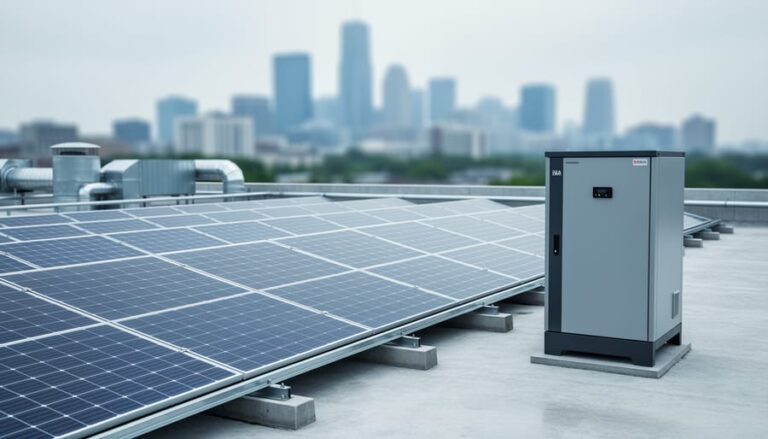
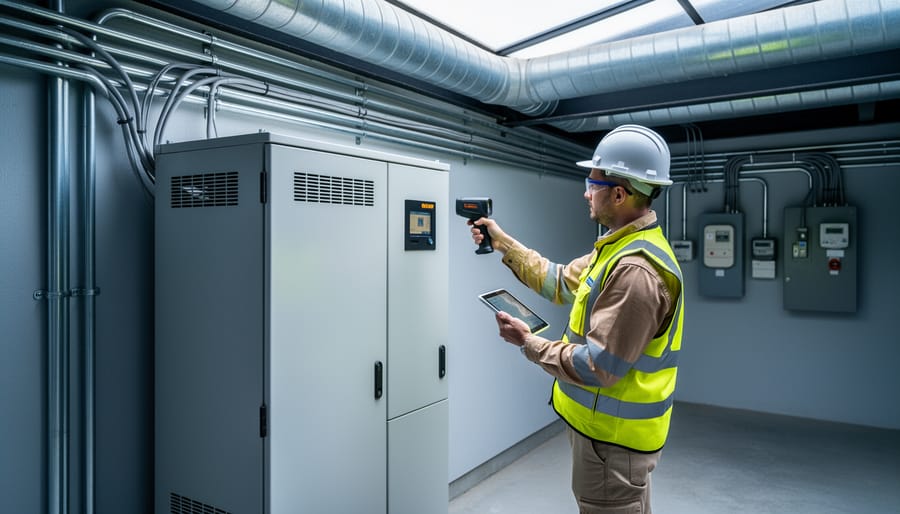
A commercial energy audit is a systematic evaluation of your business’s energy consumption patterns, equipment performance, and operational efficiency to identify cost-saving opportunities and optimize system performance. For facilities with battery storage and solar installations, this process typically takes between four to eight hours for a comprehensive assessment and can uncover savings of 15 to 30 percent on annual energy costs.
The audit process follows three core phases: preparation (gathering utility bills, system specifications, and operational data), execution (conducting on-site measurements, thermal imaging, and load analysis), and verification (comparing findings against manufacturer benchmarks and industry standards). For businesses that have invested in battery storage systems from technology partners like Tesla Powerwall or SolarEdge, the audit serves a dual purpose: validating that your original system design still matches current energy demands and confirming that battery cycling, solar production, and grid interaction are working as intended.
Most facility managers approach their first post-installation audit 12 to 18 months after system commissioning, then schedule follow-up audits every two to three years. However, significant changes in operational hours, equipment additions, or unexplained increases in utility costs warrant an immediate evaluation. The financial case is compelling. A properly conducted audit typically costs between $2,000 and $5,000 for mid-sized commercial facilities, yet the identified efficiency improvements often pay back this investment within six months.
Beyond immediate cost reduction, commercial energy auditing delivers three strategic advantages: extended equipment lifespan through early detection of performance degradation, increased energy independence by optimizing battery storage dispatch schedules, and documentation that satisfies both insurance requirements and sustainability reporting obligations. This guide walks through the complete audit process, from selecting the right measurement tools to interpreting results and implementing verified improvements.
Understanding Commercial Energy Auditing in System Aftercare
Commercial energy auditing represents a systematic evaluation of how your facility uses energy, examining consumption patterns, equipment performance, and system efficiency to uncover opportunities for improvement. While an initial commissioning verifies that your battery storage and solar systems meet specifications at installation, periodic audits assess how well these systems perform under real-world operating conditions over time. Think of commissioning as a snapshot that confirms your new Tesla Powerwall or SolarEdge system works correctly on day one, whereas audits provide ongoing health checks that reveal how usage patterns, equipment degradation, and operational changes impact performance months or years later.
Within system aftercare, auditing serves as your diagnostic tool for maintaining peak efficiency. Your battery storage system might charge and discharge correctly from a technical standpoint yet fail to optimize your demand charges because load profiles have shifted since installation. An audit catches these misalignments before they compound into thousands of dollars in lost savings. Regular audits also extend system longevity by catching minor issues before they escalate, a connection developing higher resistance, an inverter running hotter than optimal, or a solar panel experiencing shading that wasn’t present during commissioning.
The auditing process directly supports energy independence goals by confirming you’re extracting maximum value from your renewable infrastructure. When you invested in battery storage, you aimed to reduce grid reliance, lower energy costs, and gain control over electricity expenses. Audits quantify whether you’re achieving those objectives or leaving performance on the table. They reveal whether your system operates as designed or needs adjustments to match how your business actually consumes energy, ensuring the independence you planned for translates into the independence you experience daily.
Tools and Materials Needed for Commercial Energy Auditing
A thorough commercial energy audit requires the right combination of hardware, software, and documentation. Having everything prepared before you start ensures accurate measurements and comprehensive analysis of your battery storage system and broader energy infrastructure.
Essential Auditing Equipment
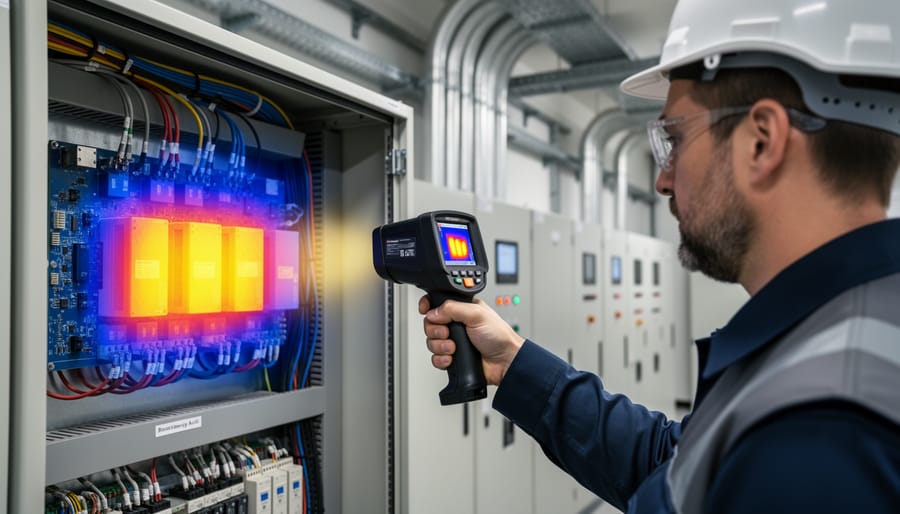
Professional-grade monitoring devices form the foundation of any energy audit. You’ll need a power quality analyzer to measure voltage, current, and power factor across circuits. A true RMS multimeter captures accurate readings on non-linear loads, which are common in facilities with inverters and battery systems. Thermal imaging cameras reveal hot spots in electrical connections, panels, and HVAC equipment that indicate energy waste or safety concerns. Clamp-on current meters allow non-invasive measurement of individual circuits without shutting down operations.
For battery storage systems specifically, ensure you have access to the manufacturer’s diagnostic interface. Tesla Powerwall systems use the Tesla app and web portal, while SolarEdge batteries require the monitoring platform login. These dashboards provide charge/discharge data, state of health metrics, and historical performance that paper logs cannot capture.
Required Documentation and Data
Gather at least twelve months of utility bills to establish baseline consumption patterns and identify seasonal variations. You’ll need complete system specifications for your solar array, inverters, and battery storage units, including model numbers, capacity ratings, installation dates, and warranty terms. Collect any previous audit reports, commissioning documents, and maintenance logs that show system performance over time.
Building documentation matters too: floor plans, occupancy schedules, operational calendars, and equipment inventories for major energy loads like HVAC systems, lighting, refrigeration, and manufacturing equipment. Production or occupancy data helps correlate energy use with business activity.
Software and Analysis Tools
Energy auditing software streamlines data collection and analysis. Options range from spreadsheet templates to specialized platforms like EnergyCAP or ENERGY STAR Portfolio Manager. Your technology partner may provide proprietary analysis tools designed for their specific battery systems. Ensure you can export data from all monitoring platforms in compatible formats.
A checklist keeps audits consistent and complete:
- Power quality analyzer and multimeter for electrical measurements
- Thermal imaging camera for visual diagnostics
- Twelve months of utility bills and energy consumption data
- Battery storage system specifications and monitoring platform access
- Building documentation including floor plans and equipment schedules
- Energy analysis software or tracking templates
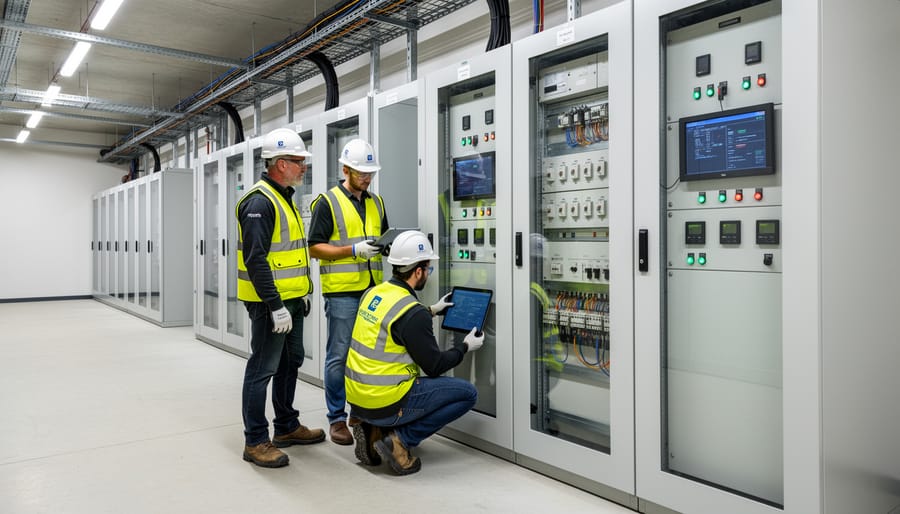
Some facilities benefit from portable data loggers that record temperature, humidity, and light levels over extended periods, revealing patterns that spot checks miss. Safety equipment including voltage detectors, arc-rated gloves, and proper PPE should always be part of your audit kit, particularly when inspecting energized battery storage systems or electrical panels.
Safety Considerations Before Beginning Your Audit
Working with commercial battery storage and renewable energy systems introduces unique electrical hazards that demand strict safety protocols. Before you begin any auditing activities involving Tesla Powerwall installations, SolarEdge inverters, or other high-capacity storage equipment, understand that these systems operate at dangerous voltage levels even when grid power is disconnected.
Start with proper personal protective equipment: insulated gloves rated for electrical work, safety glasses, closed-toe shoes with electrical hazard protection, and flame-resistant clothing when working near battery cabinets. Keep a fire extinguisher rated for electrical fires within reach during inspections.
Implement lockout/tagout procedures when examining connected equipment. Notify all facility personnel about the audit schedule, post warning signs at electrical panels, and establish clear communication protocols. For systems with multiple power sources, verify all disconnects are identified and accessible.
Review manufacturer-specific safety documentation before approaching battery systems. Tesla and SolarEdge provide detailed safety guidelines covering proper clearances, ventilation requirements, and temperature thresholds. These specifications aren’t suggestions, they’re critical safety parameters.
Your audit should remain observational and analytical. Check monitoring dashboards remotely, review system logs, inspect physical conditions visually, and measure ambient temperatures from safe distances. When you encounter exposed wiring, unusual heat patterns, burning odors, corrosion, or any condition requiring hands-on electrical work, stop immediately and contact certified electricians who specialize in commercial energy systems.
Thermal imaging and power quality measurements can be performed safely without opening panels or touching electrical components. This non-invasive approach protects both you and the equipment while gathering comprehensive audit data.
Step-by-Step Commercial Energy Auditing Process
Phase 1: Pre-Audit Preparation and Data Collection
Before you walk your facility, you need a clear picture of your baseline energy performance. Start by collecting at least 12 months of utility bills, these reveal seasonal patterns and establish your cost benchmarks for comparison after improvements.
Next, access your battery storage system’s performance data. If you run Tesla Powerwall units, log into the Tesla app or web portal to export historical charge/discharge cycles, solar production totals, and grid interaction records. SolarEdge users should navigate to the monitoring portal to download inverter performance logs, battery state-of-charge data, and consumption breakdowns by time of day. Most commercial systems archive months of data, giving you the long-term view you need to spot trends.
Document your building’s operational patterns. Create a schedule showing when equipment runs: HVAC startup and shutdown times, manufacturing shifts, peak occupancy hours, and any seasonal variations in business activity. This context explains why energy use spikes at certain times and helps you identify opportunities to shift loads into off-peak windows when your battery storage can deliver maximum value.
Gather system specifications too, original equipment datasheets, commissioning reports, and warranty documentation. You’ll reference these against current performance to spot degradation. Pull together building blueprints showing electrical panel locations and major equipment, which speeds up your physical inspection later.
Organize everything in a dedicated folder before you begin the site visit. Thorough preparation turns a vague walkthrough into a focused diagnostic that pinpoints exactly where your commercial energy system can perform better.
Phase 2: On-Site Assessment and System Inspection
The on-site inspection transforms paper data into real-world insights. Start with your battery storage system. Examine connections for corrosion, loose terminals, or discoloration that signals overheating. Check ventilation pathways around units, restricted airflow causes premature degradation. For Tesla Powerwall installations, verify the gateway connection and confirm ventilation clearances match specifications. SolarEdge systems require attention to optimizer status lights and inverter display codes.
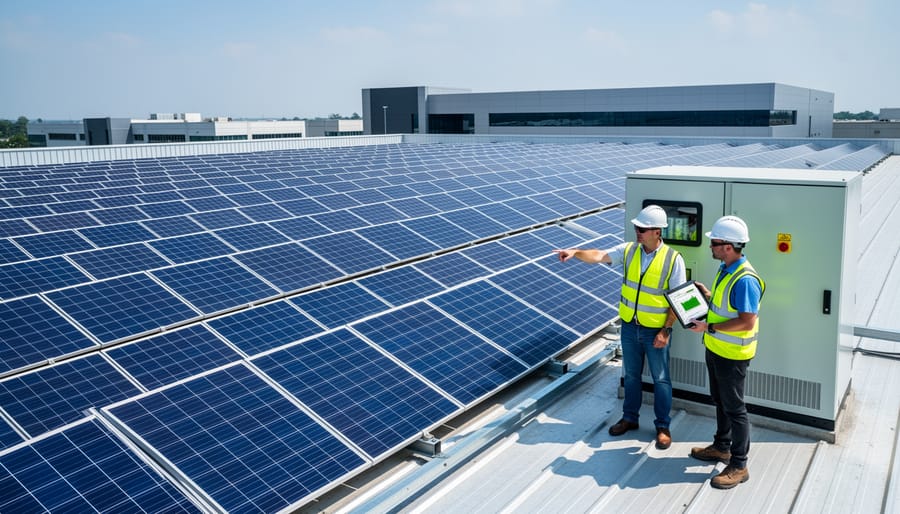
Move to the solar array next. Look for physical damage, shading from new growth or construction, and debris accumulation. Panel mounting hardware should be secure with no rust or loosening. Use infrared thermography for inspections to spot hot cells, bypass diode failures, or string irregularities invisible to the naked eye.
Inverters need close scrutiny. Document error codes, fan operation, and cooling system cleanliness. Dust buildup on heat sinks reduces efficiency and shortens equipment life. Check electrical connections at all junction boxes and disconnects for tightness and proper grounding.
Inspect your major loads: HVAC units, lighting systems, refrigeration equipment, and manufacturing machinery. Thermal imaging reveals motor imbalances, bearing wear, and control panel issues before they become failures. Note unusual vibration, noise, or operational patterns. Photograph everything, visual records prove invaluable when comparing conditions over time or justifying upgrades to stakeholders.
Phase 3: Energy Consumption Analysis
With your baseline data and on-site inspection complete, shift focus to analyzing consumption patterns and system performance. Start by mapping your facility’s energy use across different time periods, hourly, daily, and seasonal, using the data you’ve collected from utility bills and monitoring systems.
Examine peak demand windows when your energy costs spike. Compare these peaks against your battery storage discharge patterns to identify missed opportunities for load shifting. Your Tesla Powerwall or SolarEdge system dashboard reveals exactly when batteries charged and discharged, showing whether you’re maximizing savings during high-rate periods or inadvertently drawing from the grid when stored energy sits unused.
Track your battery’s charge-discharge cycles against manufacturer specifications. Consistent shallow cycling or frequent deep discharges indicate programming issues or sizing problems that undermine long-term performance and warranty coverage. Calculate your actual cycle efficiency, the ratio of energy stored versus energy recovered, and compare it to your system’s rated specifications.
Cross-reference actual solar production against projected output from your original system design. Significant gaps suggest panel degradation, shading issues, or inverter problems requiring attention. Similarly, compare your energy independence metrics, the percentage of power self-generated versus grid-supplied, against projections from your initial investment analysis.
Identify consumption patterns that don’t align with operational needs. Equipment running during unoccupied hours, HVAC overcooling spaces, or outdated lighting consuming excess power all represent fixable inefficiencies. Document these findings with specific numbers: kilowatt-hours wasted, dollars spent unnecessarily, and potential savings from corrections.
Phase 4: Identifying Optimization Opportunities
Your analysis reveals where your system underperforms, now translate those findings into actionable improvements. Start with battery programming: if charge cycles don’t align with your facility’s actual demand patterns, reprogram dispatch schedules to capture more utility savings. Tesla Powerwall systems, for instance, allow time-based control adjustments that shift stored energy to peak rate periods, directly cutting demand charges.
Load shifting opportunities often hide in plain sight. Move energy-intensive operations, industrial mixing, compressor runs, HVAC pre-cooling, to solar production hours when battery reserves are highest. One manufacturing client reduced grid dependency by 34% simply by rescheduling production equipment startups.
Equipment upgrades deliver measurable returns when audits expose inefficiencies. Aging inverters operating below 92% efficiency, LED retrofits for legacy lighting, or variable-frequency drives for motors all compound your battery storage benefits. Prioritize upgrades by payback period: improvements under 18 months warrant immediate action.
Behavioral changes cost nothing but yield consistent gains. Occupancy sensors, thermostat setbacks during off-hours, and staff awareness programs about phantom loads all extend your energy independence. Document each opportunity with projected annual savings, implementation cost, and timeline, your audit report becomes a roadmap, not just data.
Phase 5: Creating the Audit Report and Action Plan
Your audit report transforms raw data into actionable intelligence. Start with an executive summary that quantifies current performance, total energy spend, battery efficiency percentage, and identified savings potential in dollars and kWh. Present findings in clear categories: critical issues requiring immediate attention, medium-term optimization opportunities, and long-term strategic upgrades.
Prioritize recommendations using a simple matrix: rank each by estimated annual savings versus implementation cost. Quick wins like adjusted battery charge schedules or load-shifting might deliver 5-10% savings with minimal investment, while equipment replacements require capital but offer higher long-term returns. Include realistic timelines, some improvements take days (programming changes), others need budget cycles (new inverters or additional storage capacity).
For each recommendation, provide specific cost-benefit analysis. If adding battery capacity costs $15,000 but reduces demand charges by $400 monthly, show the 37-month payback. Reference your Tesla Powerwall or SolarEdge system data to support projections with actual usage patterns, not generic estimates.

Verification: Measuring Audit Success and System Performance
An audit only delivers value when you can prove it worked. Start measurement and verification immediately after implementing recommendations, waiting months dilutes the causal link between changes and results. Your battery storage system’s dashboard becomes your primary verification tool here. Tesla Powerwall and SolarEdge platforms log performance data continuously, giving you the baseline and post-implementation metrics needed to calculate real impact.
Establish specific KPIs before making any changes. Track these metrics monthly at minimum:
- Energy savings percentage compared to pre-audit consumption
- Peak demand reduction during high-cost utility periods
- Battery cycle efficiency and depth of discharge patterns
- Solar utilization rate and self-consumption ratio
- Cost savings achieved against projected figures
Pull utility bills for the same months from the previous year to isolate seasonal variables. A 15% reduction in summer cooling costs matters more than a raw kilowatt-hour comparison that ignores weather differences. Your monitoring software should overlay weather data, occupancy changes, and operational shifts so you’re comparing like periods.
Set verification checkpoints at 30, 90, and 180 days post-implementation. The first month catches immediate problems, a misconfigured battery schedule or a malfunctioning sensor. Three months reveals whether behavioral changes stuck and equipment performs consistently. Six months confirms sustained savings and justifies the audit investment to stakeholders.
Watch for drift. Systems that perform well initially can degrade if staff revert to old habits or equipment calibration shifts. Schedule quarterly reviews of your dashboard data, focusing on anomalies: unexpected consumption spikes, reduced battery capacity, or inverter efficiency drops. These early warnings prevent small issues from becoming expensive failures.
If actual savings fall short of projections by more than 10%, revisit your audit assumptions. You may have overestimated baseline waste, underestimated operational constraints, or missed an external factor like expanded operating hours. Honest verification builds credibility for future audits and refines your team’s assessment accuracy over time.
Common Commercial Energy Audit Questions
How often should commercial facilities conduct energy audits?
Most businesses with battery storage and solar systems benefit from comprehensive audits annually, with quarterly mini-audits to check key performance metrics. Facilities with high energy consumption or recent equipment changes may need more frequent assessments to maintain optimal efficiency.
Should I hire a professional auditor or conduct audits in-house?
Initial comprehensive audits typically require certified energy auditors who understand commercial battery storage systems and can identify complex inefficiencies. Once baseline data exists, trained facility staff can handle routine quarterly checks, reserving professional audits for annual deep-dives or when planning major system upgrades.
What does a commercial energy audit typically cost?
Professional audits for commercial properties range from $2,000 to $15,000 depending on facility size, system complexity, and audit depth. Facilities with Tesla Powerwall or SolarEdge battery installations should expect costs at the higher end initially, though these investments often pay for themselves within 12-18 months through identified savings.
Will auditing affect my battery storage warranty?
Properly conducted audits strengthen rather than void warranties by documenting regular system monitoring and maintenance. Most manufacturers like Tesla and SolarEdge require periodic performance verification as part of warranty terms, making audits a compliance necessity rather than a risk.
What savings can I realistically expect from audit recommendations?
Businesses implementing audit-identified improvements typically see 15-30% reductions in energy costs within the first year, with cumulative savings increasing as battery storage systems operate more efficiently. Actual results vary based on current system performance, facility operations, and which recommendations you prioritize.
These questions reflect the practical concerns facility managers face when establishing audit protocols. The frequency question matters because over-auditing wastes resources while under-auditing misses optimization opportunities, and battery storage systems perform best with consistent monitoring.
The professional versus in-house decision hinges on capability and budget. Certified auditors bring specialized knowledge of complex battery systems and thermal imaging expertise that identifies problems invisible to routine inspections. However, your maintenance staff can handle straightforward checks once they understand what to monitor and when anomalies require expert attention.
Cost considerations extend beyond the audit itself. While the upfront expense seems significant, the alternative, operating inefficient systems that drain battery capacity and spike demand charges, costs far more over time. View audits as preventive maintenance that protects your larger investment in renewable energy infrastructure.
Warranty integration often surprises businesses discovering that audits actually reinforce coverage rather than complicate it. Documentation from regular audits proves you maintained systems according to manufacturer specifications, which strengthens claims if equipment fails. Technology partners value proactive customers who monitor performance because it catches small issues before they become warranty-voiding neglect.
The savings timeline question deserves realistic framing. You won’t transform a poorly optimized facility overnight, but most businesses notice reduced utility bills within one billing cycle after implementing quick wins like adjusted battery charging schedules. Larger improvements from equipment upgrades or operational changes compound over months, making the audit’s value increasingly obvious as you track year-over-year performance improvements.
Regular commercial energy auditing isn’t a one-time checkbox exercise, it’s the foundation of effective system aftercare that protects your battery storage and renewable energy investments for the long haul. Without consistent audits, small inefficiencies compound into significant performance losses, hidden energy waste, and missed opportunities for cost savings. Your Tesla Powerwall or SolarEdge system performs best when you actively monitor, measure, and optimize its operation through structured auditing cycles.
The businesses that achieve true energy independence don’t just install systems and walk away. They commit to proactive auditing schedules, quarterly reviews for high-consumption facilities, annual comprehensive assessments for most commercial properties, that catch degradation early, verify system health, and validate that promised savings materialize. This discipline transforms auditing from compliance paperwork into a strategic tool that maximizes both environmental impact and financial returns.
Your battery storage system represents a substantial investment in sustainability and operational resilience. Protecting that investment requires the same diligence you’d apply to any critical business asset. Establish your audit routine now, whether you handle initial reviews in-house using manufacturer dashboards or partner with certified energy professionals for deeper analysis. The data you gather, the inefficiencies you eliminate, and the optimizations you implement compound year after year, ensuring your energy systems deliver peak performance and sustained value well beyond their warranty periods.