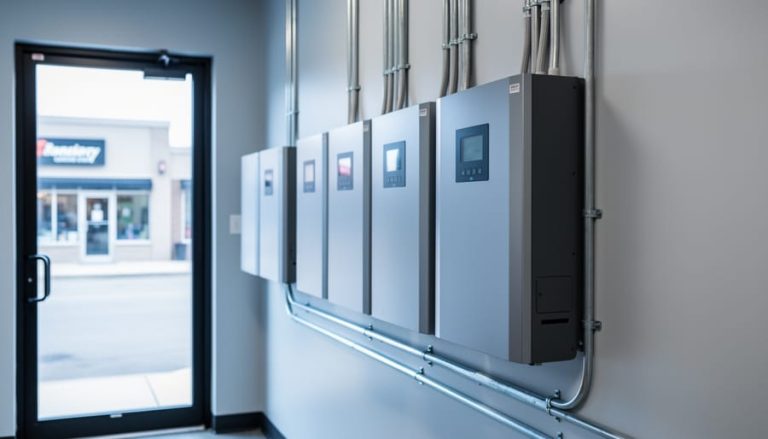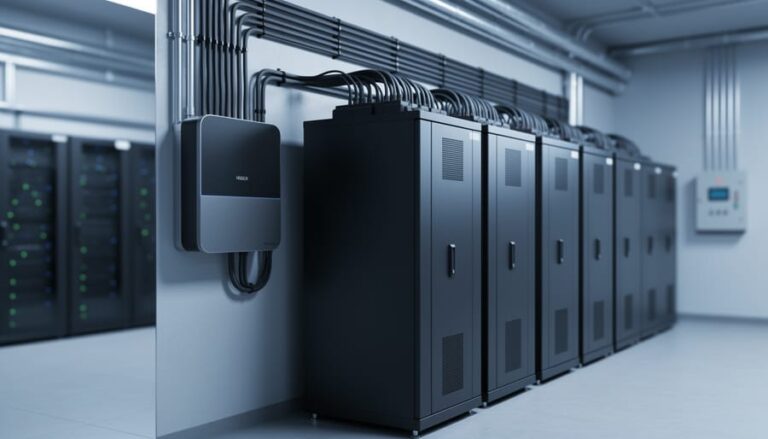
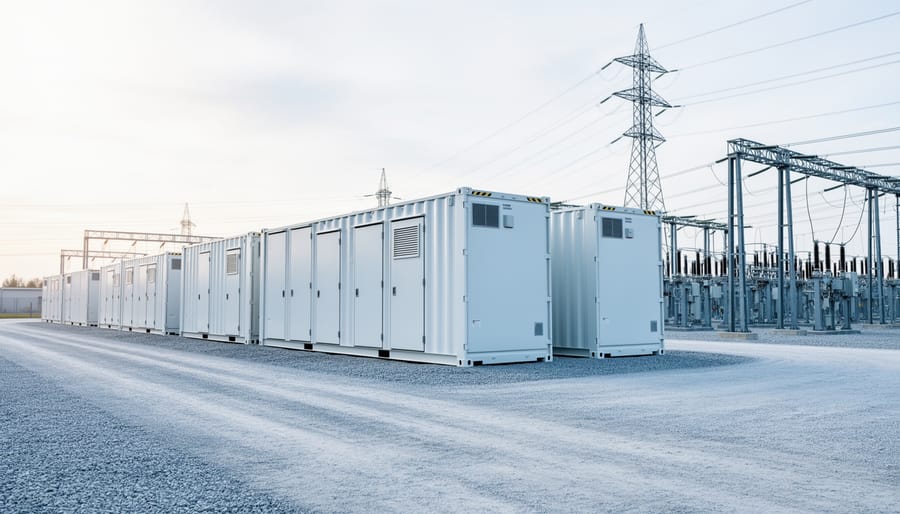
A battery storage facility is a site that stores electricity in large banks of rechargeable batteries and releases it when it’s needed. It charges when power is plentiful or cheap, then discharges when demand rises, prices climb, or the grid falls short. Think of it as a reservoir for electricity, built to hold energy until the moment it’s useful.
Utility-scale facilities can fill acres and support entire regions. The same principle works at a much smaller size, and that’s where it matters most for businesses. An on-site commercial system applies the same technology to one building or one operation, helping it manage peak demand charges, keep critical equipment running through an outage, and make better use of solar power it already produces.
This article explains how these facilities work, what they’re made of, which battery types are common, and how businesses put storage to practical use. Along the way, you’ll see why working with an experienced technology partner shapes the result, and how storage moves an operation closer to energy independence: less exposure to price swings, more control over when and how power is used.
What a Battery Storage Facility Means for Commercial Properties
Utility-Scale Facilities vs. On-Site Commercial Systems
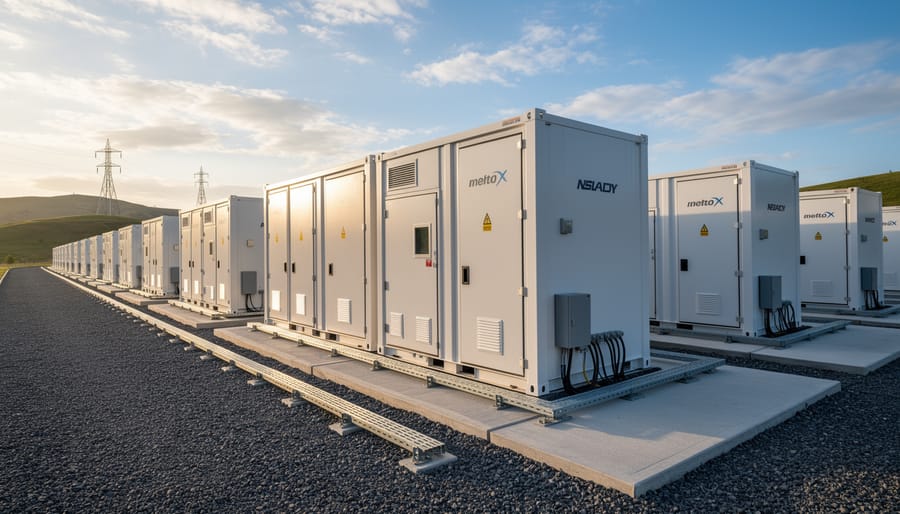
Utility-scale facilities are the big ones you may have seen on the edge of town: rows of containerized batteries connected straight to the grid. A utility or power developer operates them, and their job is to support the grid as a whole by absorbing extra generation and releasing it when demand climbs across a whole region.
On-site commercial systems work on the same principle, just closer to home and at a smaller scale. These are behind-the-meter battery storage installations, meaning they sit on the customer’s side of the utility meter at a warehouse, office, retail site, or farm. Instead of serving the grid, they serve one property.
That’s where Commercial Battery Storage Solutions fit. They give a business direct control over when it stores energy and when it uses it, whether that supports solar, keeps critical loads running during an outage, or helps manage peak-time costs.
How a Battery Storage Facility Works
Pairing Storage With Solar to Store, Use, and Sell Energy
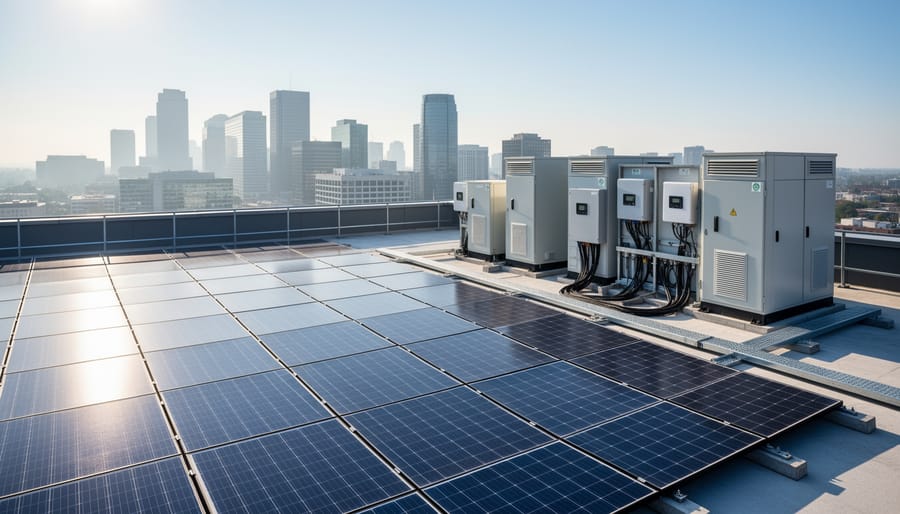
Solar panels produce the most power around midday, but many businesses use the most energy early in the morning or after the sun goes down. Without storage, the gap between those two moments is filled by the grid. Pairing solar with a battery closes it.
Here’s how it works. During the day, the panels power the building first. Any extra electricity that would otherwise flow out to the grid charges the battery instead. When production drops in the evening, the system draws from the battery, so a business can keep running on its own solar energy long after sunset. That means less electricity bought from the utility, and a smaller share of the monthly bill tied to grid prices.
This is where energy independence becomes practical rather than abstract. A site with solar and storage generates, holds, and uses its own power, and it keeps essential loads running if the grid fails. Modern systems from technology partners like SolarEdge and Tesla also include monitoring software, so owners can see what the panels produce and where the stored energy goes.
Selling energy back is a third option, though it depends heavily on location. Some utilities and local programs pay for excess power sent to the grid, or reward customers who export during peak demand. Others offer limited credit, or none at all. Checking your utility’s rules early helps you decide how to use the battery.
Key Components and Common Battery Types
Lithium-Ion and Other Battery Chemistries
Lithium-ion is the most common chemistry in commercial storage, and for good reason. It packs a lot of energy into a compact footprint, charges and discharges efficiently, and has a long track record in everything from electric vehicles to warehouse backup systems. Within the lithium-ion family, lithium iron phosphate (LFP) is widely favored for stationary use because of its thermal stability and long cycle life.
Alternatives exist. Lead-acid batteries cost less upfront but are bulkier and generally wear out sooner. Flow batteries can last a long time and scale well for lengthy discharge periods, though they take up more space. Sodium-based options are emerging, but they are less established in commercial settings.
Chemistry matters because it shapes how long a system lasts, how it manages heat, and how much floor space it needs. Before comparing chemistries, it helps to know a few core terms:
- Battery cells and modules
- Cells are the individual units that store energy. Modules group many cells together into a larger, manageable building block.
- Inverter
- The device that converts stored direct current (DC) into the alternating current (AC) your building uses.
- Battery management system (BMS)
- Onboard electronics that monitor temperature, voltage, and charge levels to keep the batteries operating safely.
- Capacity (kWh)
- The total amount of energy a system can store, similar to the size of a fuel tank.
- Power rating (kW)
- How much electricity the system can deliver at one moment, which determines what loads it can run at once.
Matching chemistry, capacity, and power rating to your site is what makes a system perform well over time.
Trusted Technology Partners Behind Modern Systems
Behind every reliable commercial battery system is hardware and software that have been tested well beyond a single installation. Established manufacturers like Tesla and SolarEdge supply integrated batteries, inverters, and monitoring platforms designed to work together, which cuts down on compatibility headaches and gives owners a clear view of how much energy is stored, used, and exported.
That integration matters in day-to-day operation. A well-matched system charges and discharges efficiently, reports problems early, and receives firmware updates over its lifetime. It also comes with warranty terms and technical support you can actually call on if something goes wrong years down the line.
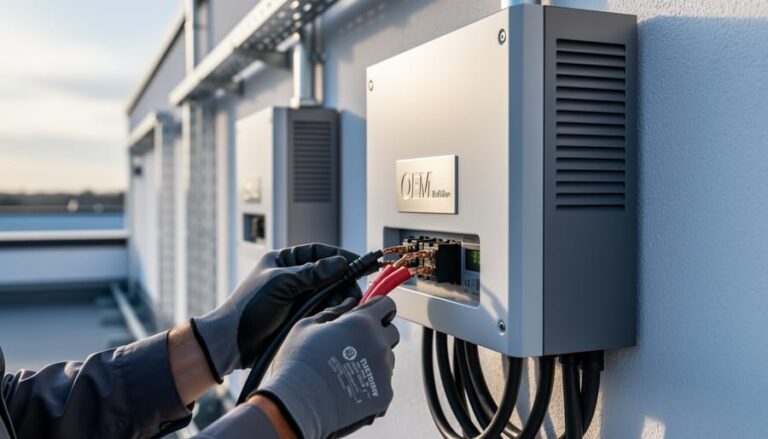
Strong OEM partnerships give installers direct access to this equipment, training, and manufacturer backing. For a business relying on stored power to keep operations running, that chain of support is just as important as the batteries themselves.
How Businesses Use Battery Storage Day to Day
Backup Power and Business Continuity
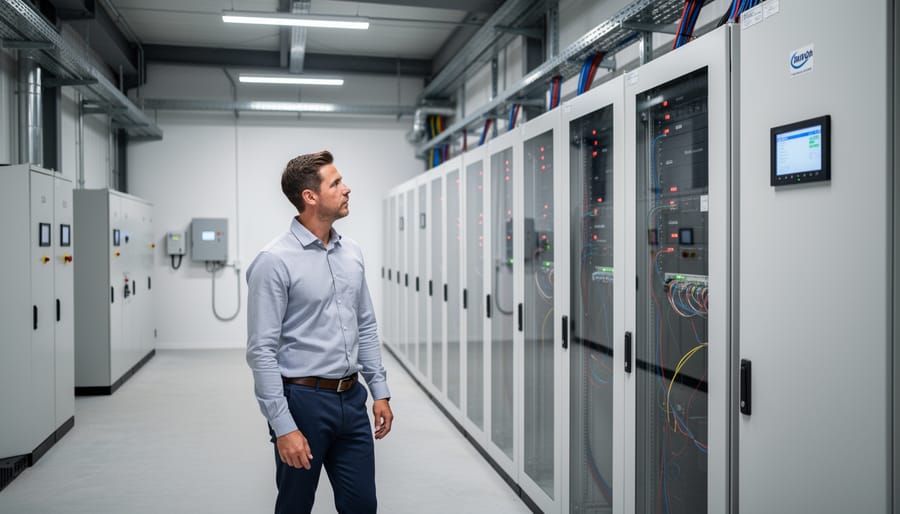
When the grid goes down, a battery storage system switches over and keeps your most important equipment running without interruption. For a business, that means more than convenience. Refrigeration stays cold, security cameras and alarms stay on, and point-of-sale terminals keep processing sales instead of sending customers away. Even a short outage can spoil inventory or stall a busy day, so ready stored power protects both revenue and operations.
Reliable backup power solutions are one of several ways a battery system earns its place on a commercial property:
- Backup power during outages for critical loads
- Peak demand reduction to ease utility charges
- Time-of-use energy shifting to cheaper hours
- Maximizing solar self-consumption after sundown
- Supporting sustainability targets
Resilience is often the benefit businesses notice first, and it supports energy independence every day, not only during emergencies.
Managing Energy Costs and Demand Charges
Electricity doesn’t cost the same at every hour. Many utilities charge more during peak periods, usually late afternoon and early evening, and less overnight or midday. A battery lets a business buy or generate power when it’s cheap, then draw from storage when rates climb. That shift, often called time-of-use arbitrage, can trim the energy portion of a bill.
Demand charges work differently. Many commercial customers pay based on their single highest burst of power use in a billing period, not just total consumption. If a few machines start at once, that one spike can set the charge for the whole month. Storage can cover those spikes by discharging for a short time, which flattens the peak the utility sees.
How much you save depends heavily on your local rate structure, your usage pattern, and whether you have solar. A site with steep peak pricing and sharp demand spikes will see more benefit than one with flat rates. Reviewing your utility bills is the best place to start.
Is a Battery Storage System Right for Your Property?
A battery storage system makes the most sense when your property’s energy habits give it something to work with. Start with your usage patterns: if your demand spikes at certain hours or your bills include steep demand charges, stored energy has real value. Existing or planned solar strengthens the case, since batteries let you use your own power after sundown. Your utility’s rate structure matters too, because the gap between peak and off-peak pricing shapes what a system can do for you.
Then consider practical needs, such as available space, installation access, and your sustainability goals. A tailored assessment is the best way to size a system, and commercial energy auditing can show where your load really sits. Once a system is running, an aftercare guide helps keep it performing. The same technology also strengthens residential solar setups.
Common Questions About Battery Storage Facilities
How is a battery storage facility different from a power plant?
A power plant generates electricity by burning fuel, spinning turbines, or capturing sunlight or wind. A battery storage facility doesn’t create new energy; it stores power from the grid or from solar panels and releases it later when it’s needed.
How long do commercial batteries typically last?
Lifespan depends on the battery chemistry, how often the system cycles, and operating conditions, so there’s no single number. Manufacturers publish warranties and expected cycle counts, which are the best guide for any specific system.
Can a battery system run a building during an outage?
Yes, if it’s designed for backup. A properly configured system can keep critical loads such as refrigeration, security, and point-of-sale equipment running, though how much and for how long depends on the system’s size and what you connect to it.
Do I need solar panels to use battery storage?
No. A battery can charge from the grid during low-cost periods and discharge when rates climb or power goes out. Pairing it with solar simply gives the battery a free, renewable source to draw from.
Safety is the question we hear alongside these, and it’s a fair one. Modern commercial systems include built-in monitoring, temperature management, and protective shutoffs, and they’re installed to meet applicable electrical and fire codes. Working with established hardware partners and qualified installers matters here, because proper design and commissioning are what keep a system running reliably year after year.
A battery storage facility is, at its core, a place where electricity is saved for later: stored when it’s cheap, clean, or plentiful, and released when it’s needed most. Commercial battery storage puts that same principle to work on a smaller scale, right at your warehouse, office, retail site, or farm.
For a business, that means more control. You can lean on your own stored solar power after sundown, keep critical equipment running through an outage, and manage energy costs by shifting when you draw from the grid. It also supports sustainability goals by making better use of the clean energy you already produce.
Every property is different, so the best next step is a tailored assessment of your usage patterns and goals. Explore what a properly sized system could do for yours.