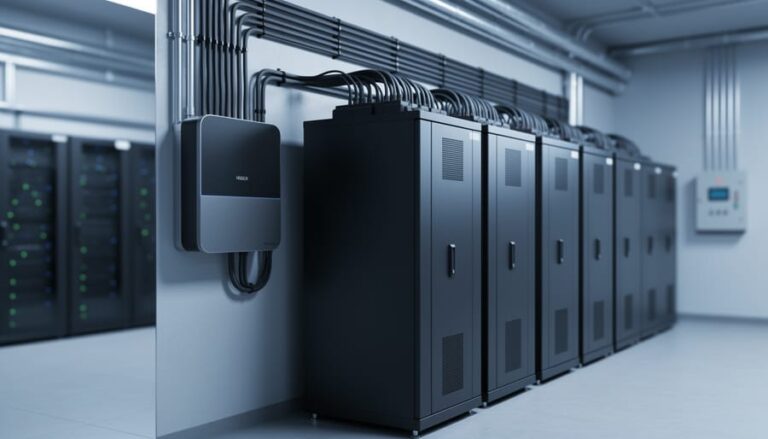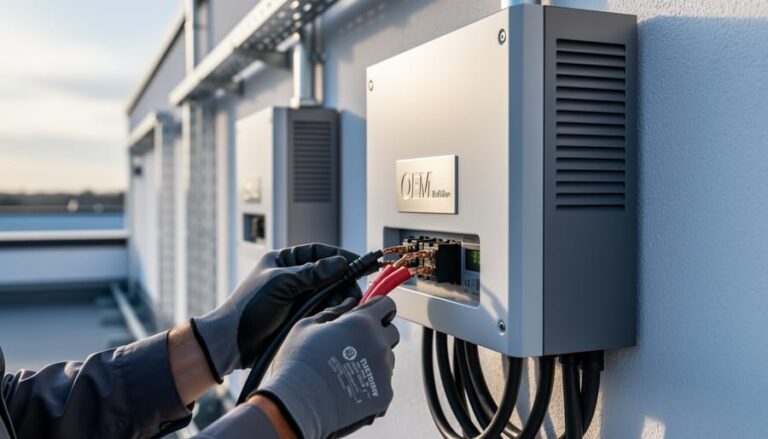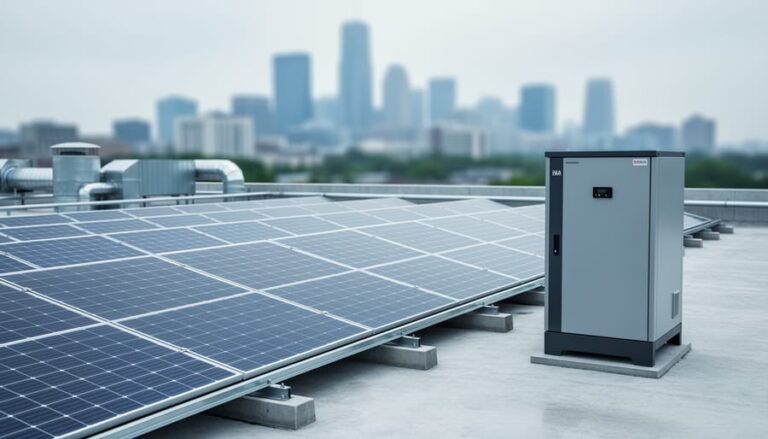
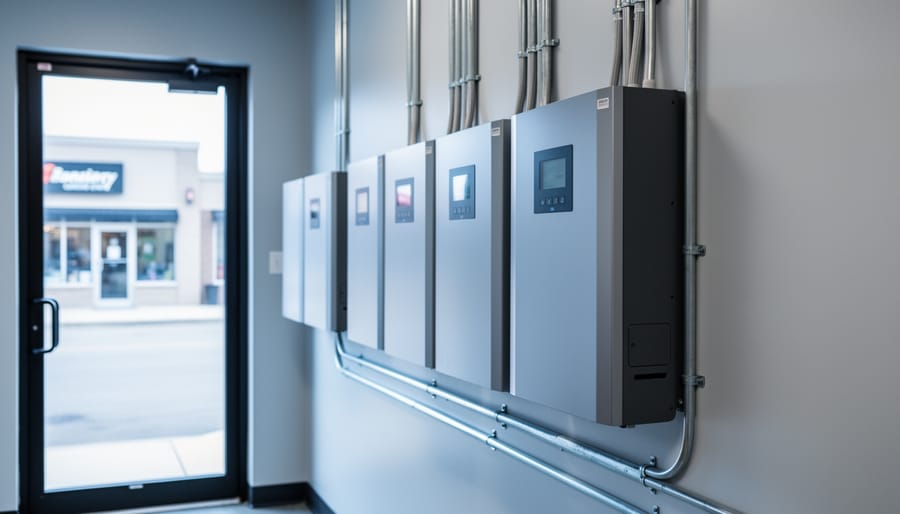
Modern battery backup systems keep small businesses operational during power outages while reducing energy costs and supporting sustainability goals. Unlike traditional diesel generators that require ongoing maintenance and fuel costs, today’s battery storage solutions from partners like Tesla and SolarEdge integrate seamlessly with existing electrical systems, providing instant power switching when the grid fails.
For most small businesses, implementing an effective backup solution requires assessing your critical power loads (typically 5-50 kW), selecting the right battery capacity, and working with certified installers who understand both electrical requirements and local permitting. The process takes one to three days for standard installations, with systems ready to protect operations immediately.
The shift toward battery-based backup represents more than just disaster preparedness. These systems actively manage energy costs through peak-shaving strategies, storing power during off-peak hours when electricity rates are lowest and deploying it during expensive demand periods. Combined with solar panels, they create genuine energy independence that insulates businesses from grid instability and rising utility rates.
What makes battery backup particularly valuable for small businesses is the dual benefit structure: protection against revenue loss during outages while simultaneously cutting monthly operating expenses. A properly sized system can reduce annual energy costs by 20-40% in many commercial settings, delivering measurable ROI beyond the peace of mind that comes with guaranteed uptime.
This guide walks through the complete implementation process, from calculating your power requirements and comparing technology options to understanding installation steps and verifying system performance. Whether you run a retail location, professional office, or light manufacturing facility, the right backup solution protects both your bottom line and your commitment to sustainable operations.
Understanding Your Small Business Power Needs
Before investing in any backup power system, you need to understand exactly how much energy your business consumes during an outage. This assessment determines both the capacity you’ll need and the appropriate technology for your situation.
Start by identifying your critical equipment, the systems that absolutely must stay operational during a power failure. For most small businesses, this includes computer backup power for servers and workstations, point-of-sale systems, security cameras, internet routers, refrigeration units, and essential lighting. Walk through your facility and list every piece of equipment that supports core operations or protects assets from damage during outages.
Next, calculate the actual power draw of each critical device. Check the manufacturer’s label on each piece of equipment for its wattage rating or amperage. If you find amperage instead of watts, multiply amps by voltage (typically 120V for standard outlets, 240V for larger equipment) to get watts. Add these individual loads together to determine your peak power demand in kilowatts (kW). A thorough commercial energy auditing process can provide precise measurements if you need detailed load profiles.
Runtime requirements depend on local grid reliability. Check average outage duration data for your region to understand typical disruption lengths. Coastal areas prone to hurricanes might need systems capable of 24-48 hours of operation, while urban locations with reliable grids might only require 2-4 hours of backup. Consider your worst-case scenario rather than average conditions.
Finally, separate your loads into tiers. Tier one includes equipment that must activate immediately during an outage, tier two covers systems you can bring online after a few minutes, and tier three represents nice-to-have loads you can run if battery capacity permits. This prioritization helps right-size your system and prevents over-investment in unnecessary capacity while ensuring critical operations remain protected.
Backup Power Solution Options: Battery Storage vs. Traditional Generators
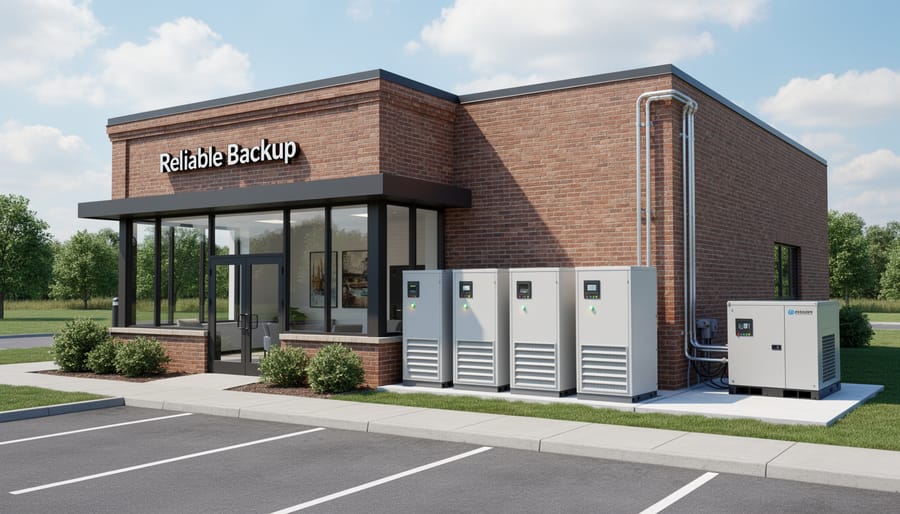
When choosing backup power for your small business, you’ll likely weigh two main paths: modern battery storage systems or traditional fuel-powered generators. Each has distinct operational characteristics that affect your business differently.
Traditional diesel or propane generators have served businesses for decades. They kick in when the grid fails, burning fuel to produce electricity. Installation is relatively straightforward, they sit outside your building with fuel tanks nearby and connect to a transfer switch. However, they require regular maintenance: oil changes, filter replacements, and periodic test runs to ensure they’ll start when needed. Many business owners discover their neglected generator won’t start during an actual outage.
Battery storage systems represent a fundamentally different approach. Solutions like the Tesla Powerwall and SolarEdge systems store electricity in lithium-ion batteries, ready to discharge instantly when power fails. The transition happens in milliseconds, so fast your computers won’t even notice. There’s no combustion engine, meaning zero emissions, no fuel deliveries, and virtually silent operation.
The maintenance difference is striking. Battery systems require minimal upkeep beyond occasional software updates handled remotely. No oil, no filters, no fuel stabilizers. This translates to lower ongoing costs and fewer service visits disrupting your operations.
Integration capabilities set battery storage apart. These systems connect seamlessly with solar panels, allowing you to charge batteries with your own solar production and use that stored energy during outages or peak-rate periods. Through strategic OEM partnerships with proven technology providers, professional installers deliver systems that manage energy intelligently, reducing your electricity bills even when the grid is working fine.
Generators excel at extended outages where fuel capacity determines runtime. If you’re in an area prone to multi-day blackouts and can’t integrate solar, a generator might make sense. But for most small businesses, battery storage offers superior daily value. You’re not just buying backup power, you’re investing in energy independence that pays dividends through demand charge reduction and time-of-use optimization.
The noise factor matters more than many realize. Generators create 65-75 decibels during operation, potentially disturbing neighbors and violating local noise ordinances. Battery systems operate silently, making them suitable for dense commercial areas where generators face restrictions.
For 2026, battery storage aligns with both practical needs and sustainability commitments, positioning your business as forward-thinking while delivering measurable cost savings alongside reliability.
What You’ll Need: Tools, Materials, and Professional Requirements
Installing a battery backup system for your business is not a DIY project. Unlike consumer-grade equipment, commercial backup power solutions require specialized expertise, certified installers, and professional-grade components that integrate safely with your existing electrical infrastructure.
System Components
The core hardware for a battery storage installation includes several critical elements working together. You’ll need battery storage units from established manufacturers like Tesla Powerwall or SolarEdge, the number of units depends on your calculated power requirements. An inverter converts stored DC power to AC electricity your equipment can use, while a transfer switch automatically shifts between grid power and battery backup during outages. Modern systems also include monitoring equipment that tracks energy usage, battery health, and system performance through smartphone apps or web dashboards. If you have existing solar panels or plan to add them, integration hardware connects these components into a unified energy management system.
Professional Services and Prerequisites
Before installation begins, comprehensive planning ensures your facility can accommodate the new system:
- Licensed electrician certified in battery storage installation and local commercial electrical codes
- Structural engineer assessment if mounting heavy battery units on walls or elevated platforms
- Building permits from your local jurisdiction, typically requiring detailed electrical plans
- Utility company notification and approval for grid-connected backup systems
- Electrical panel capacity evaluation to confirm your existing infrastructure can handle the integration
- Installation space meeting manufacturer specifications for ventilation, temperature control, and accessibility
- Site preparation including dedicated electrical circuits and proper grounding
- Insurance documentation review to understand coverage implications
- Fire marshal approval in some jurisdictions, especially for larger battery installations
Your electrical panel must have sufficient capacity for both the charging equipment and the transfer switching mechanism. Most commercial installations require panel upgrades or subpanel additions, adding to project scope. The installation area needs climate control if batteries will be exposed to temperature extremes, plus clear access for future maintenance.
Working with certified installers who partner with major battery manufacturers ensures warranty protection and code compliance. These professionals handle permit applications, coordinate inspections, and verify that every component meets safety standards, protecting both your investment and your business operations.
Safety Precautions and Pre-Installation Considerations
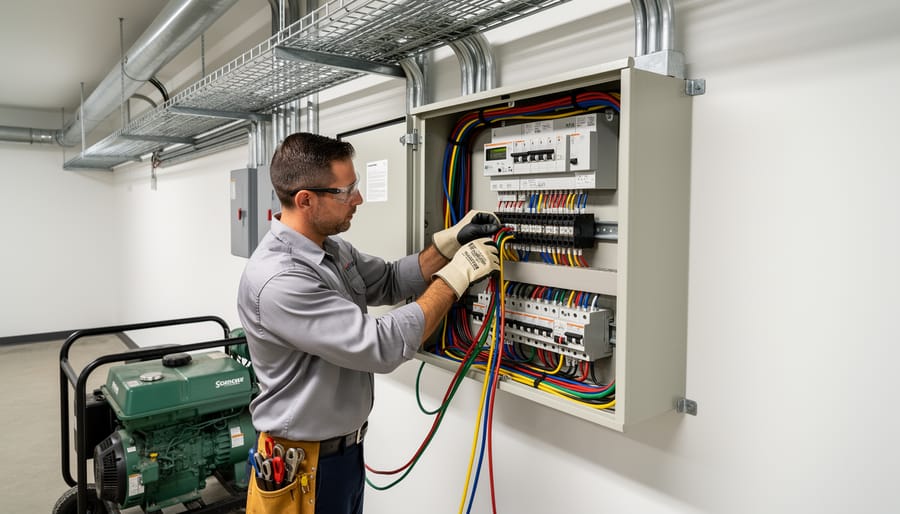
Installing a battery backup system involves working with high-voltage electrical equipment, utility grid connections, and large-capacity battery units, none of which should be attempted without proper training and certification. Commercial electrical systems operate at voltages and amperages that can cause severe injury or death if handled incorrectly. Even if you’ve successfully completed residential electrical projects, business installations present additional complexity: three-phase power configurations, higher load capacities, utility interconnection protocols, and stringent commercial building codes all require specialized expertise.
Before any physical work begins, you’ll need to secure multiple permits and approvals. Your municipality requires electrical permits for commercial system modifications, and your utility company must approve any grid-tied backup installation. The permitting process typically takes two to four weeks and involves plan reviews by local code enforcement officials. Skipping this step can result in fines, forced system removal, and complications when you file insurance claims after an outage.
Fire safety considerations are non-negotiable for battery installations. Lithium-ion battery systems like Tesla Powerwall and SolarEdge require adequate clearances from combustible materials, usually three feet minimum on all sides. The installation space must maintain temperatures between 32°F and 110°F, and proper ventilation prevents heat buildup that could degrade battery performance or create thermal runaway conditions. Your installer should verify that your building’s fire suppression system covers the battery location and that fire department access isn’t obstructed.
Insurance implications deserve attention before you commit. Contact your commercial property insurer to discuss how battery storage affects your coverage. Most insurers require notification of major electrical system modifications, and some may adjust premiums based on the added equipment value and altered risk profile. Proper installation by certified professionals, combined with regular maintenance documentation, typically satisfies insurer requirements and protects your claim eligibility if problems arise.
Step-by-Step Installation Process
Phase 1: Site Assessment and System Design
The site assessment begins when a certified installer visits your business to evaluate three critical factors: your physical space, existing electrical infrastructure, and actual energy consumption patterns. They’ll inspect your electrical panel to verify it can accommodate a battery backup system, measure available wall or floor space for equipment mounting, and identify the optimal location considering ventilation requirements and accessibility for future maintenance.
During this consultation, installers review your utility bills from the past 12 months to understand seasonal energy fluctuations and peak demand periods. They’ll ask which equipment absolutely must stay operational during outages, refrigeration units, security systems, servers, or critical machinery, helping determine the battery capacity you need. Expect them to photograph your electrical setup and take detailed measurements.
To prepare, gather recent electric bills, list your essential equipment with their power ratings (check nameplates or manuals), and clear access to your main electrical panel and potential installation areas. If you have solar panels, have that system’s specifications ready. The installer will use this information to design a solution sized specifically for your business, balancing backup runtime requirements against budget and available space. This customized approach ensures you’re neither over-paying for unnecessary capacity nor under-protected during outages.
Phase 2: Permits and Approvals
The permitting phase typically takes two to four weeks, though timelines vary by jurisdiction. Your installer handles most paperwork, but you’ll need to sign permit applications and provide business documentation like proof of ownership or landlord approval for leased spaces.
Expect your installer to submit electrical permit applications to your local building department and interconnection agreements to your utility company. Most jurisdictions require approved plans before starting physical work. Utility companies must review how battery systems connect to the grid, some require additional metering equipment or service upgrades.
Your responsibilities include being available to answer questions about your building’s electrical history, responding promptly when inspectors need access, and keeping communication open with your installer about any lease restrictions or HOA requirements that might affect approval timing.
Phase 3: Physical Installation
Installation day typically spans one to three business days depending on system complexity. Your certified installer will arrive with all equipment, including your chosen battery units, Tesla Powerwall or SolarEdge Energy Hub systems are popular choices for commercial applications due to their proven reliability and seamless integration capabilities.
The physical installation begins with mounting the battery units. Wall-mounted systems like the Tesla Powerwall require structural anchoring to support approximately 250 pounds per unit, while floor-mounted configurations need adequate clearance for ventilation. Installers ensure proper spacing from walls and clearance from combustible materials as required by fire codes.
Next comes the critical electrical work. Technicians install a gateway or transfer switch that enables automatic switching between grid power and battery backup. This equipment connects directly to your main electrical panel and creates an isolated backup circuit for essential loads you identified during planning. For businesses with existing solar installations, installers configure the system to integrate battery charging with solar production, maximizing energy independence.
The inverter connections follow, linking battery DC power to your building’s AC electrical system. Tesla and SolarEdge systems include built-in inverters optimized for commercial backup applications, reducing component complexity.
Throughout installation, expect temporary power interruptions as technicians safely disconnect and reconnect circuits. Most installers work to minimize business disruption by scheduling around your operating hours when possible.
Phase 4: System Configuration and Grid Integration
After the physical installation is complete, your installer moves into the critical configuration phase, programming your battery system to deliver intelligent, automatic backup power while maximizing cost savings during normal operations.
The installer begins by programming backup activation sequences. This determines which loads receive power first during an outage and how quickly the system switches from grid to battery power. For most businesses, the transition happens in milliseconds, preventing disruption to sensitive equipment like computers and point-of-sale systems.
Next comes monitoring software setup. You’ll receive login credentials for a dashboard, typically Tesla’s mobile app for Powerwall installations or SolarEdge’s monitoring platform, that lets you track real-time energy flow, battery charge levels, and system performance from any device. Your installer walks through the interface, showing you how to read the data and set up alerts for low battery or system faults.
The most valuable configuration step involves energy management programming. Installers optimize charge-discharge schedules based on your utility’s rate structure. If you have time-of-use pricing, the system charges during off-peak hours and discharges during expensive peak periods, cutting your electricity costs even when the grid is functioning normally. This daily optimization transforms your backup system into an active cost-reduction tool.
Phase 5: Final Inspection and Activation
The final inspection involves verification by local building authorities and your utility company that the installation meets all electrical and safety codes. Installers will demonstrate system functionality by conducting a controlled backup transition, showing how the system automatically switches during an outage. Before signing completion documents, verify that monitoring software displays accurate data, all circuit breakers are properly labeled, and you’ve received full documentation including warranties, system specifications, and emergency procedures. Ensure the installer provides comprehensive training on monitoring capabilities and manual override functions.
Testing Your Backup System and Verifying Proper Operation
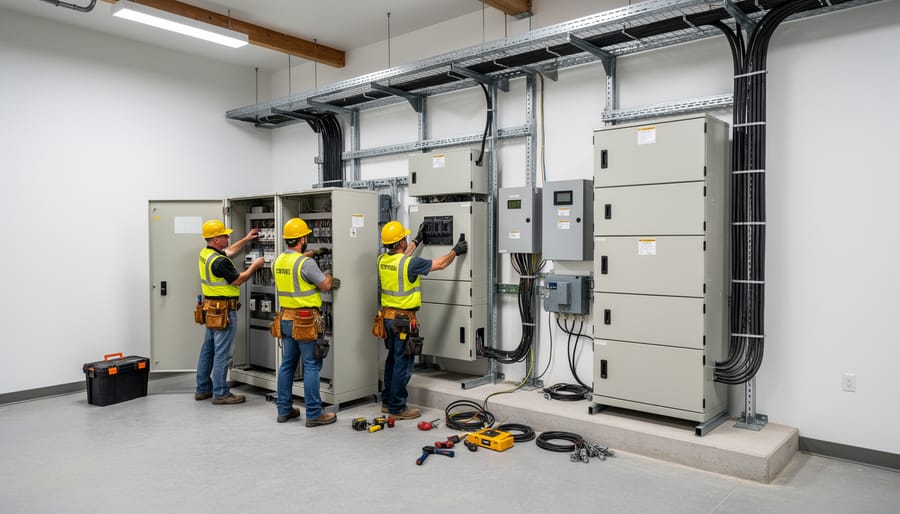
Once your battery backup system is commissioned and signed off, rigorous testing confirms it will protect your business when you need it most. Your installer should conduct initial verification, but you must understand what’s being tested and how to assess results. This knowledge ensures your backup power solution delivers genuine peace of mind, not just a false sense of security.
Initial System Verification Checklist
Work through these verification steps systematically, ideally with your installer present to explain findings:
- Confirm all battery units show full charge status on monitoring displays and that charge levels match system capacity specifications.
- Verify automatic transfer switch settings correctly identify critical loads and that backup activation thresholds are programmed as designed.
- Test manual override controls to ensure you can force the system into backup mode if needed during maintenance windows.
- Review monitoring software access on your computer or mobile device, confirming you can view real-time system status remotely.
- Conduct a simulated grid outage by having the installer safely disconnect utility power while your business operates normally, observing seamless transfer to battery power.
- Measure actual runtime under typical business load to validate that battery capacity meets your calculated critical load requirements.
- Verify automatic grid reconnection when utility power returns, ensuring smooth transition back without manual intervention.
During the simulated outage test, monitor transfer speed. Quality systems switch in milliseconds, keeping computers and sensitive equipment running without interruption. Document baseline performance metrics during this initial test as your reference point for after installation aftercare comparisons.
Establish monthly testing schedules where you briefly disconnect grid power during low-activity periods, verifying consistent automatic operation. Track battery discharge rates, recharge times, and any performance degradation over months. Healthy systems maintain stable runtime and quick recharge cycles, while declining metrics signal maintenance needs before actual emergencies expose problems.
Ongoing Maintenance and Optimization for Long-Term Performance

Your battery backup system now protects your business from outages, but ongoing care determines whether it delivers value for five years or twenty. Regular maintenance isn’t complicated, yet many businesses skip it until problems emerge.
Start by establishing a quarterly review schedule. Most modern battery systems, especially those from partners like Tesla and SolarEdge, include monitoring software that tracks performance metrics remotely. Check these dashboards monthly for unusual patterns in charging cycles, capacity degradation, or system alerts. Your installer should provide training on interpreting this data during the final activation phase.
Basic maintenance tasks include:
- Check monitoring software monthly for alerts, capacity trends, and unusual discharge patterns
- Verify firmware updates are applied automatically or schedule them quarterly
- Inspect battery enclosures for dust buildup, temperature extremes, or physical damage every three months
- Schedule professional inspections annually to test electrical connections and calibrate performance
- Document all outage events and system responses to identify optimization opportunities
Understanding your warranty terms prevents costly mistakes. Most battery manufacturers offer 10-15 year warranties with specific conditions about depth-of-discharge limits and environmental factors. Operating outside these parameters can void coverage, so review documentation carefully and configure your system to stay within recommended thresholds.
Battery charging optimization extends system lifespan significantly. Configure your system to avoid repeated full discharge cycles unless absolutely necessary. Smart systems can learn your usage patterns and pre-charge before anticipated demand spikes or weather events that might cause outages.
Many businesses overlook revenue opportunities their backup systems enable. Working with providers who offer bespoke energy solutions can unlock participation in demand response programs, where utilities compensate you for making stored energy available during peak grid stress. Some regions also allow energy arbitrage: charging batteries when electricity prices are low and discharging during expensive peak periods to reduce operating costs beyond backup protection alone.
Common Questions About Small Business Backup Power
Business owners considering backup power solutions typically have similar concerns when evaluating their options. The answers below address the most common questions we hear from small businesses exploring battery storage systems.
What’s the typical investment range for a small business battery backup system?
Complete battery backup installations for small businesses generally range from $15,000 to $50,000, depending on your power requirements and whether you’re integrating with existing solar panels. Systems sized for essential operations only cost less than whole-facility backup configurations.
How does battery backup work with my existing solar system?
Battery storage integrates seamlessly with solar installations, storing excess solar production during the day for use during outages or peak-cost periods. If you already have solar panels, adding battery backup creates a complete energy independence solution that works even when the grid goes down.
What’s the expected lifespan of a commercial battery backup system?
Quality battery systems like Tesla Powerwall and SolarEdge solutions typically last 10-15 years with proper maintenance, often matching or exceeding manufacturer warranties. Performance gradually decreases over time, but most systems retain 70-80% capacity after a decade of use.
Can I expand my battery backup system as my business grows?
Most modern battery systems are modular and scalable, allowing you to add additional battery units as your power needs increase. Proper initial planning ensures your electrical infrastructure can accommodate future expansion without requiring complete system redesign.
Payback periods vary significantly based on your local electricity rates, outage frequency, and whether you participate in utility demand response programs. Businesses in areas with high electricity costs or frequent power disruptions often see returns within 5-8 years, especially when combining backup capability with peak shaving strategies that reduce demand charges.
The environmental benefits extend beyond eliminating generator emissions. Battery systems charged by solar panels create a completely clean backup solution, reducing your carbon footprint while improving operational resilience. Many businesses find this dual benefit particularly valuable when communicating sustainability commitments to customers and stakeholders.
One question that surprises many business owners: battery backup systems can actually generate revenue through grid services programs in some regions. Your system can discharge stored energy back to the grid during peak demand periods, earning payments while maintaining enough reserve capacity for emergency backup. This capability transforms your backup system from a pure expense into a potential profit center.
Investing in a battery backup solution for your small business in 2026 isn’t just about keeping the lights on during outages. It’s a strategic decision that delivers energy independence, long-term cost savings, and environmental responsibility all at once. While the upfront investment requires careful planning, the combination of uninterrupted operations, reduced reliance on the grid, and potential energy cost optimization makes battery storage systems increasingly cost-effective over their 10-15 year lifespan.
The technology has matured significantly, with proven systems from industry leaders offering reliability that traditional generators simply can’t match. But your investment is only as good as the installation behind it. Working with experienced, certified installers who partner with trusted brands ensures your system performs exactly as designed when you need it most.
Your business deserves the security and sustainability that modern backup power provides. Take the next step by scheduling a professional energy assessment to see how battery storage can protect your operations while advancing your commitment to clean energy and operational resilience.